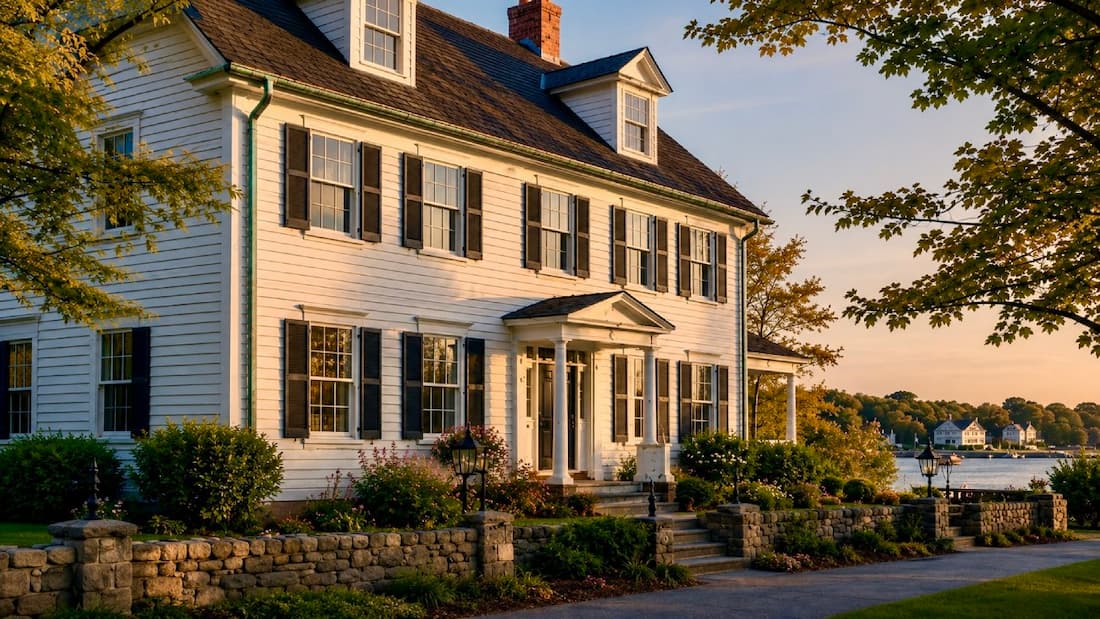


There is a particular kind of quiet pride that comes with owning an old house in New London County. Maybe it is a Colonial that has watched over its street since before the Revolution, or a Victorian in Stonington Borough with gingerbread trim and a widow’s walk that has seen a hundred and fifty New England winters come and go. These homes carry history in their bones, and anyone who has cared for one knows that keeping them standing tall takes more than good intentions. It takes the right materials, chosen the right way.
That is where copper gutters come in, and it is a subject that genuinely excites George.

If you own a historic home anywhere from Mystic to Stonington to New London itself, this is for you. So, is anyone restoring an older property or simply looking to protect a newer home with something built to last? New London County’s coastline brings salt air, nor’easters, heavy snow loads, and humid summers, all in the same twelve months. That kind of weather swing is hard.
“People think gutters are just there to move water,” George says. “But on an old house, they are also part of the architecture. Get them wrong, and you can actually hurt the look of a beautiful home. Get them right, and they disappear into the design the way they were meant to.“
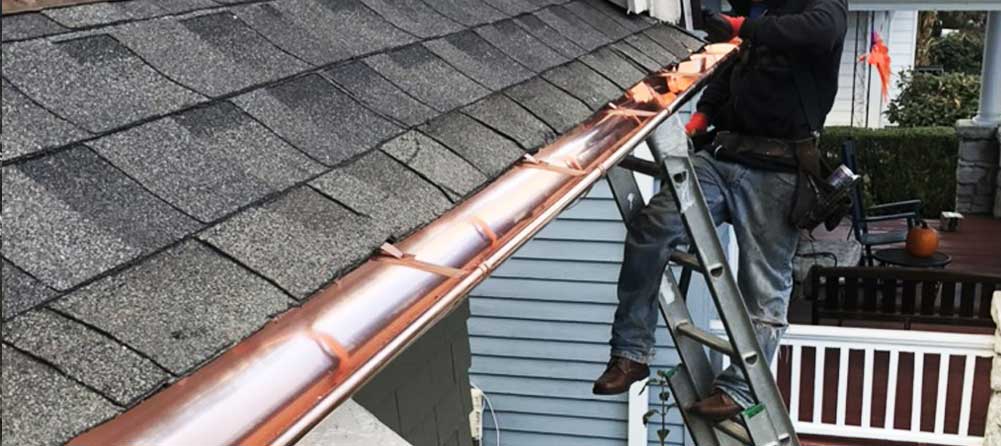
Copper has been used on New England roofs and gutters for well over two centuries, and it was not chosen by accident. It does not rust. It does not need painting. It resists the kind of freeze-thaw cracking that shortens the life of lesser materials. Most importantly, for a period home, copper was likely part of the original construction, or at least of the era in which it was built, which makes it historically honest as well as beautiful.
George recommends copper specifically for Colonial and Victorian homes because the material’s warmth and weight match the proportions and detailing these houses were designed around. A half-round copper gutter along a Colonial roofline looks like it belongs there, because in a sense, it always did.

“George believes a house should look like itself,” is how Michael, our salesman, puts it to homeowners weighing their options. “You do not put vinyl siding on a Victorian and call it preservation. The same thinking applies to the gutters.“

One question George hears constantly is what happens to copper over time, and the answer is one of the material’s greatest strengths. Fresh copper starts bright and penny colored. Over roughly 10 to 15 years, depending on coastal exposure and sun exposure, it weathers to darker browns. Eventually, it settles into the soft blue-green patina people associate with old churches and historic landmarks.
“That patina is not wear and tear,” George explains. “It is a protective layer. It is the copper defending itself, and it happens to look gorgeous while it does it.“
For homeowners in Mystic and Stonington especially, where salt air speeds up the process a bit, that patina often becomes a defining feature of the home within a decade, tying the gutters visually to weathered slate roofs, aged brick, and the general seaside character of the architecture.

This is where the investment starts to make sense on paper and in curb appeal. Properly installed copper gutters routinely last 50 to 100 years, and there are copper gutter systems still functioning on New England homes built well over a century ago. Compare that to the fifteen- to twenty-year lifespan of a typical aluminum system, and the math tells its own story, especially for a homeowner planning to stay put or pass the house down.
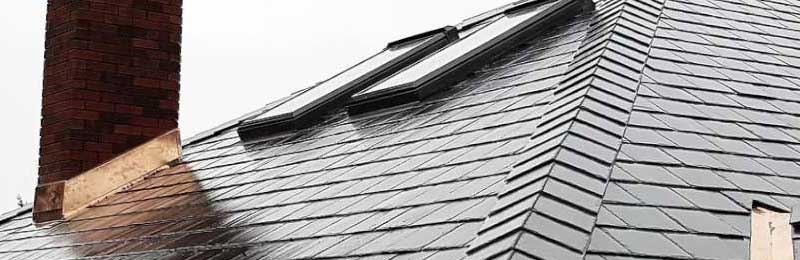
George always encourages homeowners to think beyond the gutters themselves. Copper flashing around chimneys, dormers, and roof valleys should be considered alongside new copper gutters whenever possible.
“George suggests matching your flashing to your gutters any time the budget allows,” Michael tells clients. “It keeps the whole roofline speaking the same language, and it means everything weathers together instead of aging at different rates and looking mismatched ten years down the road.“
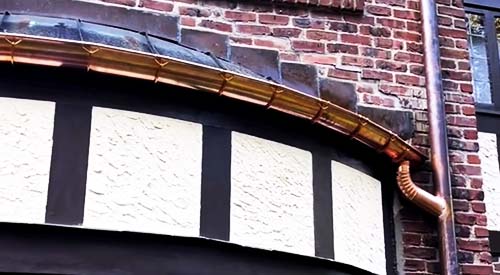
Preservation groups across New England have increasingly encouraged the use of copper and other traditional metals for historic renovations, both to maintain accuracy and because copper’s low environmental impact and recyclability align with modern sustainability goals. For newer construction in New London County, copper is also gaining ground among homeowners who simply want a gutter system they will genuinely never have to replace.
Confirm your home's architectural style and era, since copper suits Colonial, Victorian, and many other traditional profiles particularly well.
Ask your installer about half-round versus K-style profiles for your roofline.
Discuss patina timeline expectations based on your home's coastal exposure
Consider matching copper flashing at chimneys, dormers, and valleys
Ask about copper gauge and craftsmanship, since thickness and seam quality affect lifespan
Get a clear estimate on total system cost versus long-term savings from reduced replacement costs
Confirm your installer has specific experience with historic New England homes
Why Choose George’s Seamless Gutters?
If you are weighing your options for a historic home in Mystic, Stonington, or anywhere else in New London County, George and the team would be glad to walk your property with you and talk through what makes sense for your house specifically.
Call or text George’s Seamless Gutters at 888-321-0735, or request a free quote.