
Ask ten homeowners along the Connecticut shoreline what they want out of a gutter system, and you will likely get ten different answers. Some care most about how it looks against a historic facade. Others just want something that will hold up to a nor’easter without a second thought. The truth is, in coastal Fairfield County, the answer usually comes down to a choice between two well-proven gutter profiles: half-round and K-style. Both do the job. Neither is wrong. But they are not interchangeable, and knowing the difference can save a homeowner real money and real headaches down the road.
We asked George to walk us through it the same way he does with homeowners standing in their driveways, looking up at their own rooflines for the first time with new eyes.
Fairfield County is a place of contrasts. You have Colonial farmhouses that have stood since before the county existed, Victorian homes with elaborate trim work, and newer construction going up along the same streets. Add in a coastline that brings salt air, humidity, and genuinely dramatic weather swings across all four seasons, and the gutter decision becomes more than cosmetic. It is structural.
“People come to us thinking gutters are gutters,” George says. “But the shape of the gutter changes how much water it can move, how it looks on the house, and how much work it takes to keep clean. Those are three different conversations, and I think homeowners deserve to have all three before they decide.“

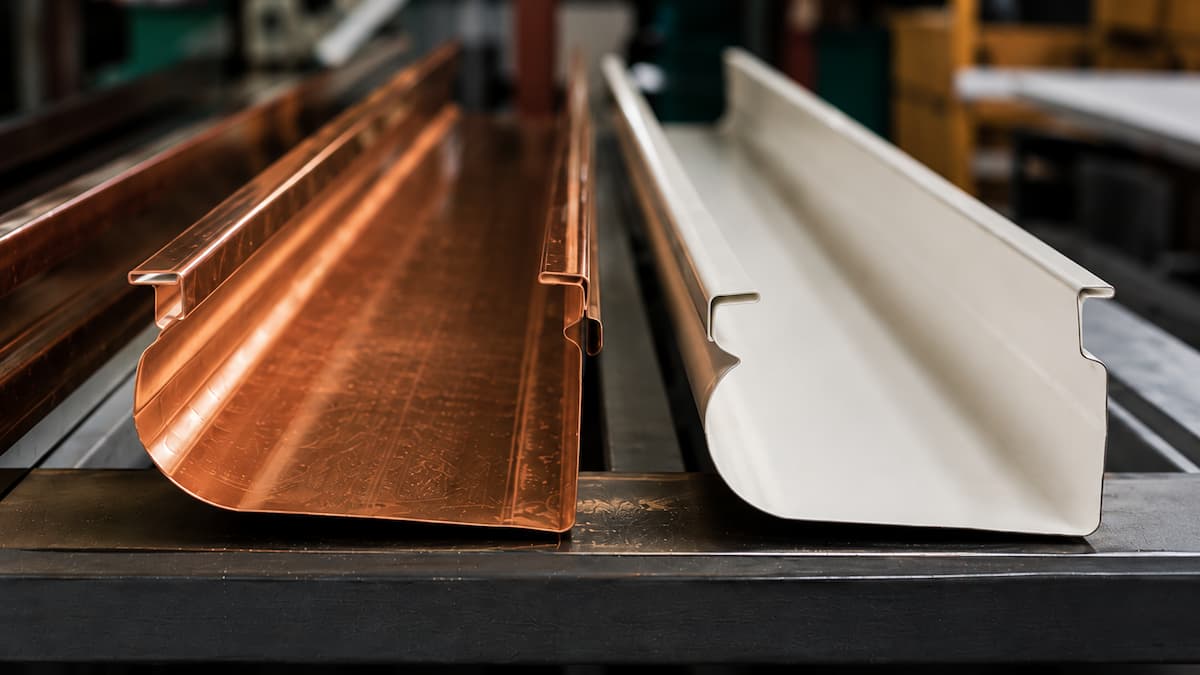
Half-round gutters are exactly what they sound like: a smooth, semi-circular trough, open on top, with a rounded profile that has been used on American homes for well over a century. K-style gutters, by contrast, have a flat back and bottom with a decorative front edge that, viewed from the side, resembles the letter K. They were developed later, in the twentieth century, largely as a more affordable, higher-capacity alternative.
“George recommends half-round for almost any historic or traditional home,” Michael, our salesman, tells clients weighing the two. “It is the style these houses were designed around in the first place. K-style tends to suit more modern builds, or homes where a homeowner wants maximum water capacity without worrying as much about matching a period look.“

If sheer water handling is the top priority, K-style gutters generally have the edge. Their shape allows for a slightly larger interior volume relative to their outer dimensions, which becomes meaningful during the kind of heavy downpours coastal Connecticut sees more often than it used to. For homes with large, steep, or complex rooflines that funnel a lot of water into a short run of gutter, that extra capacity matters.
Half-round gutters can absolutely be sized up to handle serious water volume, too. George often recommends a larger-diameter half-round system paired with round downspouts on bigger or older homes, specifically to close that capacity gap without sacrificing the classic look.

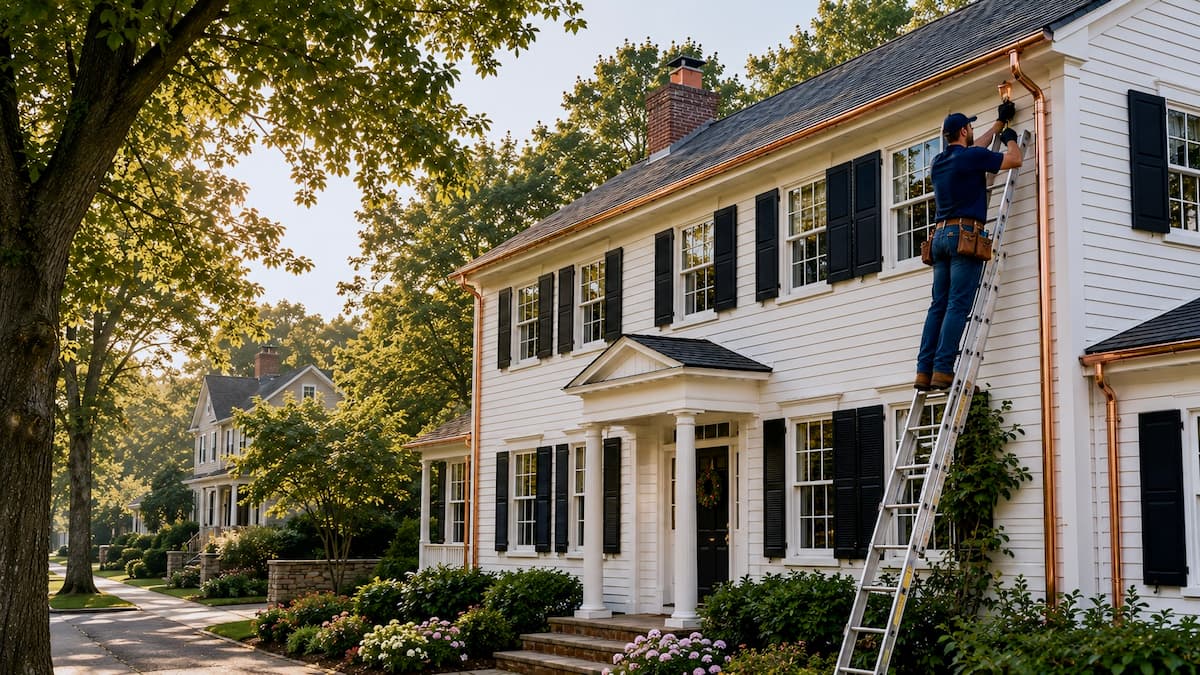
There is no getting around it. Half-round gutters, especially paired with round downspouts, have a softness and historical authenticity that K-style simply was not designed to replicate. On a Colonial, a Victorian, or almost any home built before the mid-1900s, half-round gutters look original, because on many of these homes, they essentially are.
“George believes the gutter should disappear into the architecture, not compete with it,” Michael explains. “On an older home especially, K-style can sometimes look like it was added on rather than built in. Half-round just sits right.“
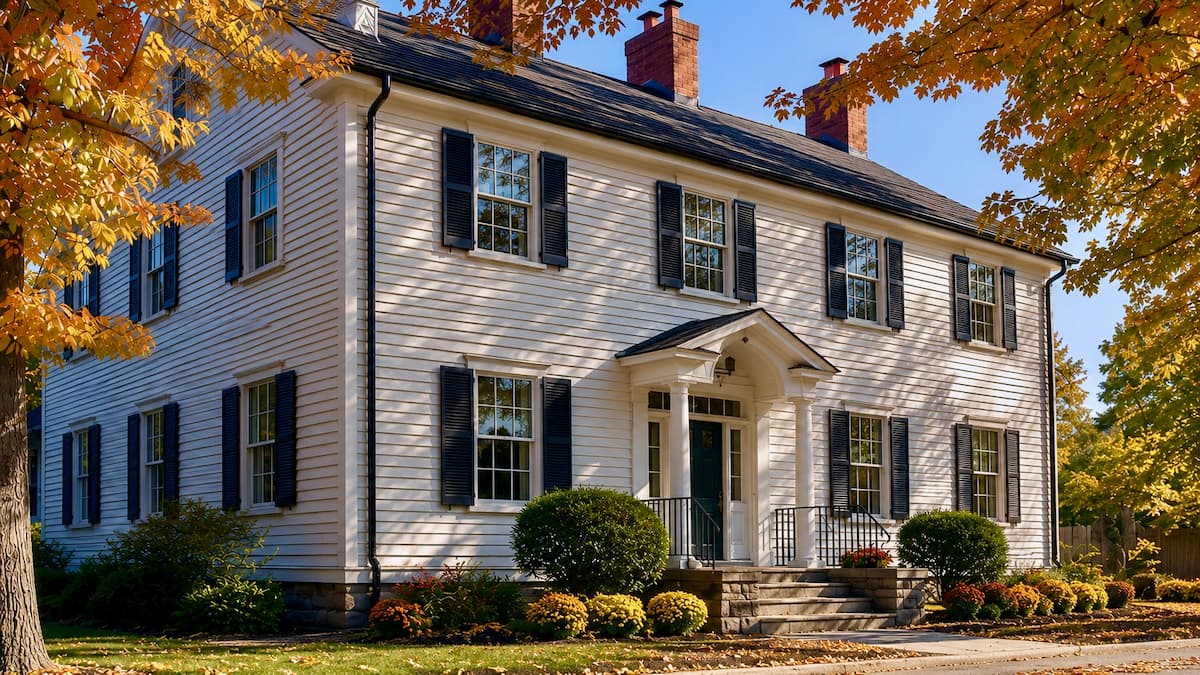
K-style still holds its own on more contemporary homes, where its cleaner lines and lower profile can complement modern rooflines nicely.
Half-round gutters have a distinct advantage when it comes to debris. Their smooth, rounded interior gives leaves, pine needles, and grit less to catch on, which means less frequent buildup. K-style gutters, with their flatter bottom and interior corner, tend to collect debris a bit more readily and may need more regular attention, particularly under mature trees, which are in no shortage along the Connecticut shoreline.
“George suggests gutter guards on either style if you have got heavy tree cover,” George notes. “But if low maintenance is genuinely your top priority, half-round starts a step ahead.”
K-style gutters are typically the more budget-friendly option, largely due to their wide availability and the efficiency with which they can be fabricated. Half-round systems, particularly in copper or heavier-gauge materials, represent a larger upfront investment. Still, many homeowners find that investment pays off in durability, curb appeal, and, on the right home, resale value.
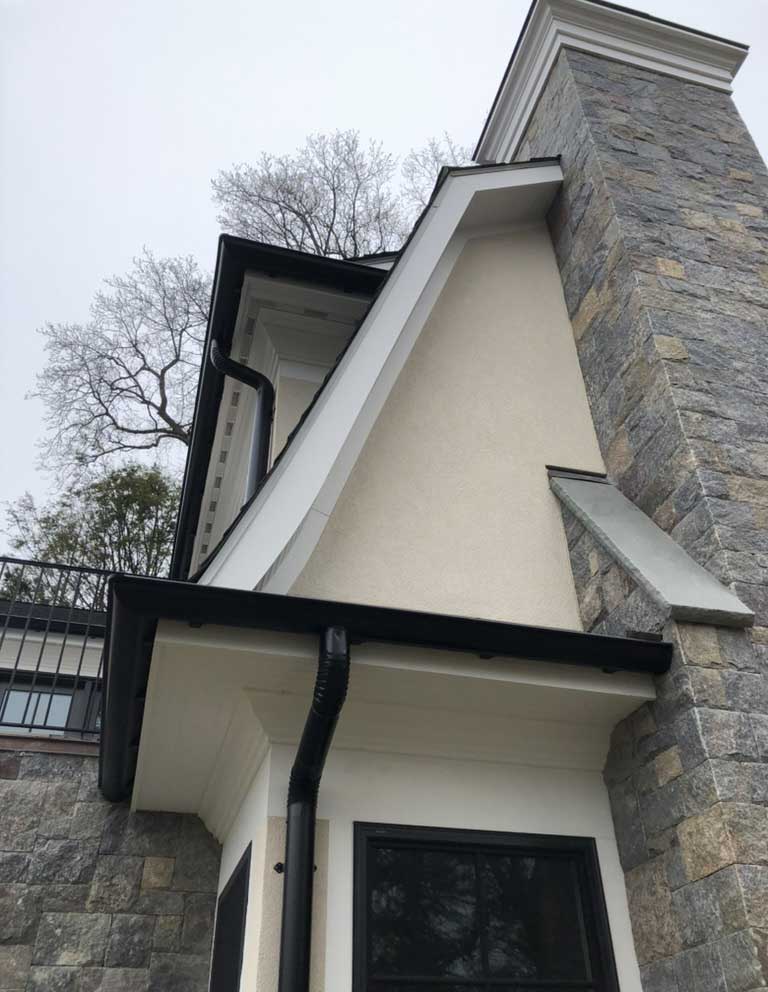
Colonial and Victorian homes: Half-round gutters, ideally with round downspouts, for historical accuracy and a softer visual line.
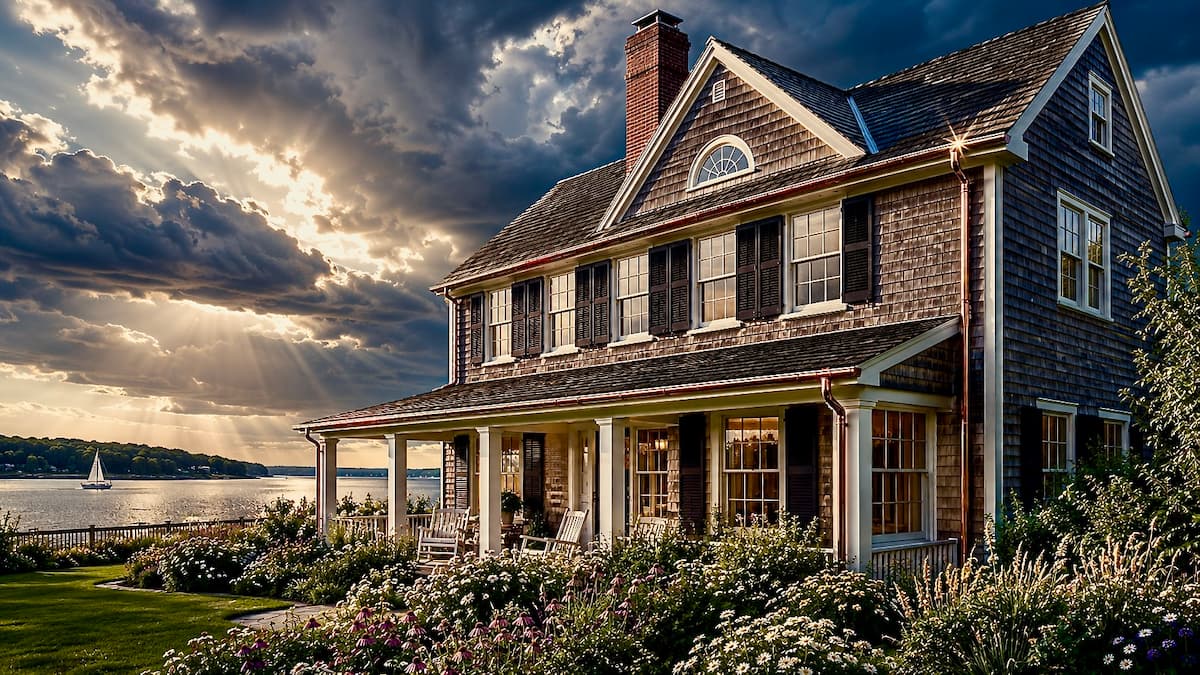
Coastal cottages and shingle-style homes: Half-round for a traditional New England look that ages gracefully.
Contemporary and newer construction: K-style for cost efficiency and higher water capacity on simpler rooflines.
Homes with heavy tree cover: Half-round for easier maintenance, or either style paired with gutter guards.
Identify your home's architectural style before choosing a profile.
Ask about water capacity needs based on your roof size and pitch.
Consider how much tree cover surrounds your property.
Compare upfront cost against long-term maintenance and durability.
Ask your installer about matching downspout style, round for half-round, rectangular for K-style.
Request samples or photos of both profiles installed on similar homes nearby.

Why Choose George’s Seamless Gutters?
George and his team are always glad to walk a property and talk through which profile best fits a home, not just which one is easiest to sell.
Call or text George’s Seamless Gutters at 888-321-0735, or request a free quote.