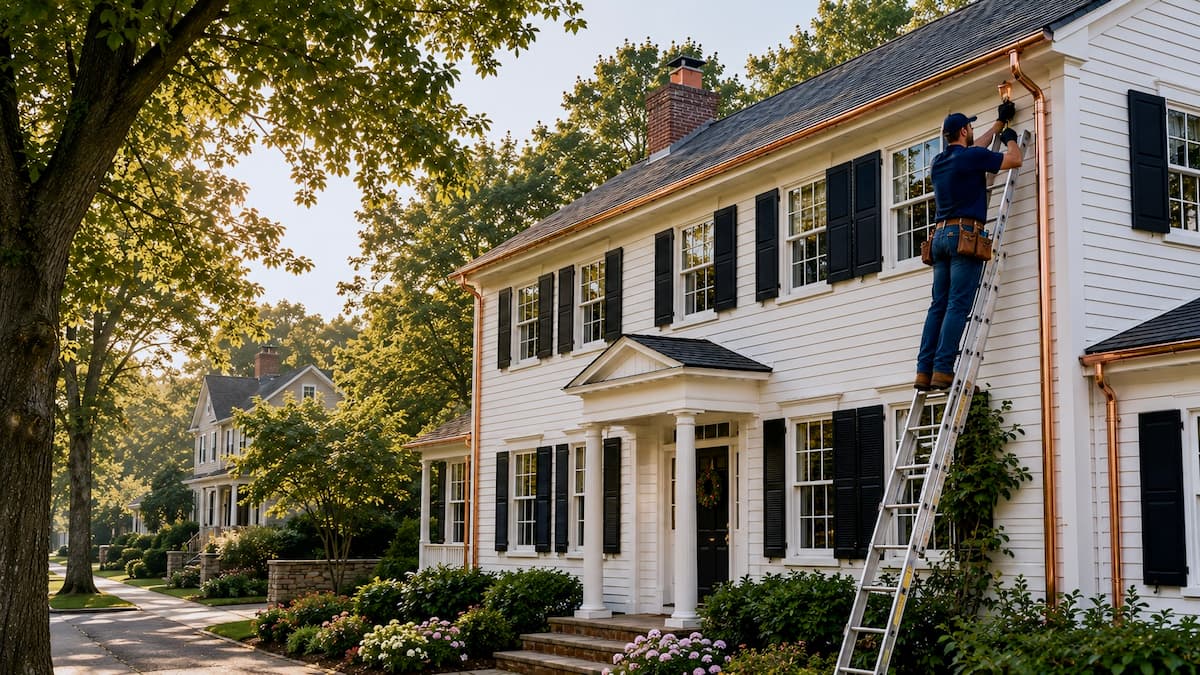

There is a reason homeowners along the Connecticut shoreline cannot simply pick whatever gutter system looks nice in a catalog and call it a day. Living near the water is a privilege, but it comes with a very specific set of challenges, and few parts of a home bear that burden more quietly and constantly than the gutter system. Between salt air, coastal winds, winter ice, and the kind of sudden, heavy downpours that seem to be arriving more often these days, a coastal home needs a gutter system that was actually chosen for the job, not just for the price tag.
We asked George to walk through what that decision really involves, the way he does with homeowners across New London County every single week.
“People come to me thinking a gutter is a gutter,” George says. “But if you live near the water, what works fine forty minutes inland might not hold up out here at all. I want people to understand why, not just take my word for it.“
If your home sits within a mile or two of Long Island Sound, or anywhere the salt air reaches on a windy day, this applies to you directly. The same goes for homes with large, complex rooflines, since more roof surface means more water funneling into your gutter system during a storm. Even homeowners further inland benefit from understanding these factors, since coastal weather patterns tend to travel.
Salt air does its damage slowly, which is exactly what makes it dangerous. It accelerates corrosion on metal surfaces, and over the years, that process can quietly eat away at a gutter system’s structural integrity long before the damage becomes visible from the ground.
“George suggests that salt exposure is the single biggest factor coastal homeowners overlook,” Michael, our salesman, explains. “You might not see it happening, but it is happening, especially on lower-grade aluminum or anything with a compromised coating.“
Copper stands out here because it naturally resists corrosion rather than relying on a coating that can wear away over time. Higher-grade, properly coated aluminum can still perform well, but it demands more attention and a shorter realistic lifespan when exposed directly to coastal conditions.
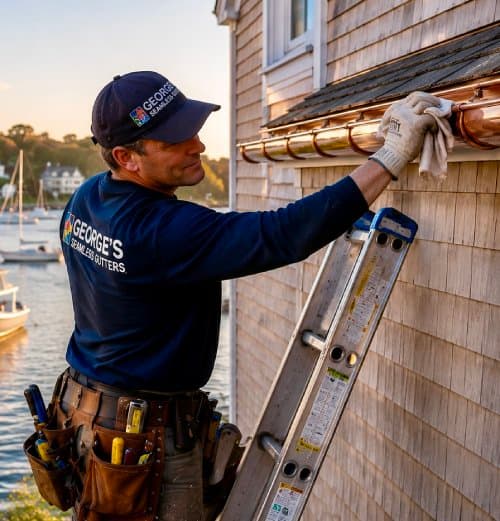
Coastal Connecticut sees serious wind events across every season, from winter nor’easters to summer thunderstorms that arrive with real force off the water. Gutters need to be properly fastened and supported to withstand sustained pressure, particularly during storms that can rip a poorly installed system clean off the fascia.
“George recommends heavier-duty hangers and tighter spacing for homes exposed to open water or elevated positions,” George says. “It costs a little more upfront, but I have seen what happens when someone skips that step, and it is not pretty.“
Winter brings its own set of problems. Ice damming, where melting snow refreezes at the roof edge and backs up under shingles, can put serious strain on a gutter system, sometimes pulling it away from the house entirely under the weight. Proper installation, including correct pitch and secure fastening, matters enormously here, as does choosing a material that can flex slightly with temperature swings without cracking.
“George believes ice is where cheap installation really shows its weaknesses,” Michael notes. “A well-installed system handles it. A rushed one does not.“

Coastal Connecticut is home to many larger, architecturally complex properties, and larger roofs mean significantly more water runoff during a storm. Undersized gutters are among the most common and preventable problems George’s team encounters, often due to a previous contractor who did not account for the roof’s true square footage or pitch.
“George thinks sizing is the most underrated part of this whole process,” George says. “People get excited about material and color, which I understand, but if the system cannot physically handle the water your roof produces, none of that other stuff matters. It is going to overflow no matter how good it looks.“
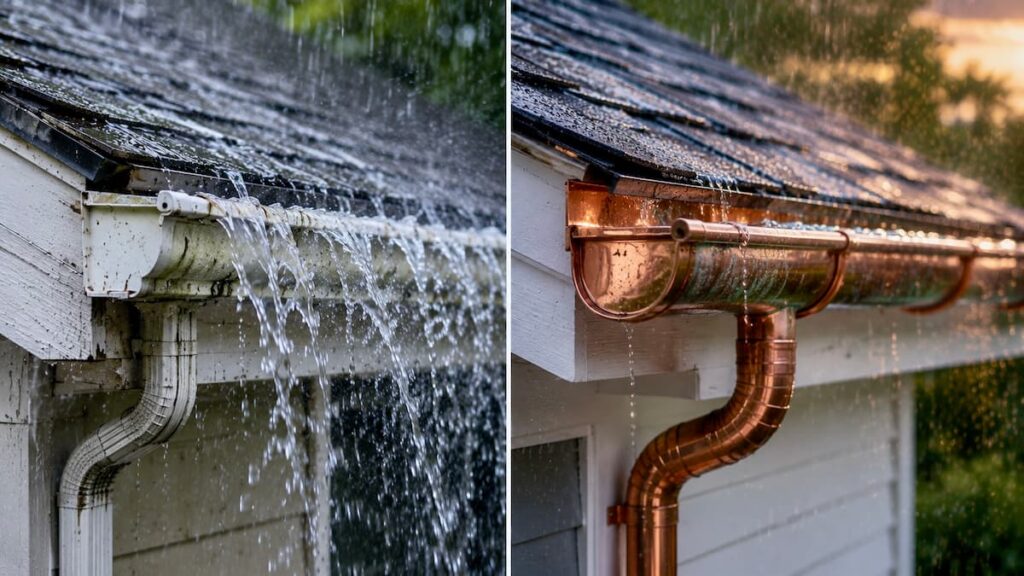
Proper sizing takes into account roof square footage, pitch, and the realistic rainfall intensity the region experiences, which has trended noticeably heavier in recent years according to regional climate data.
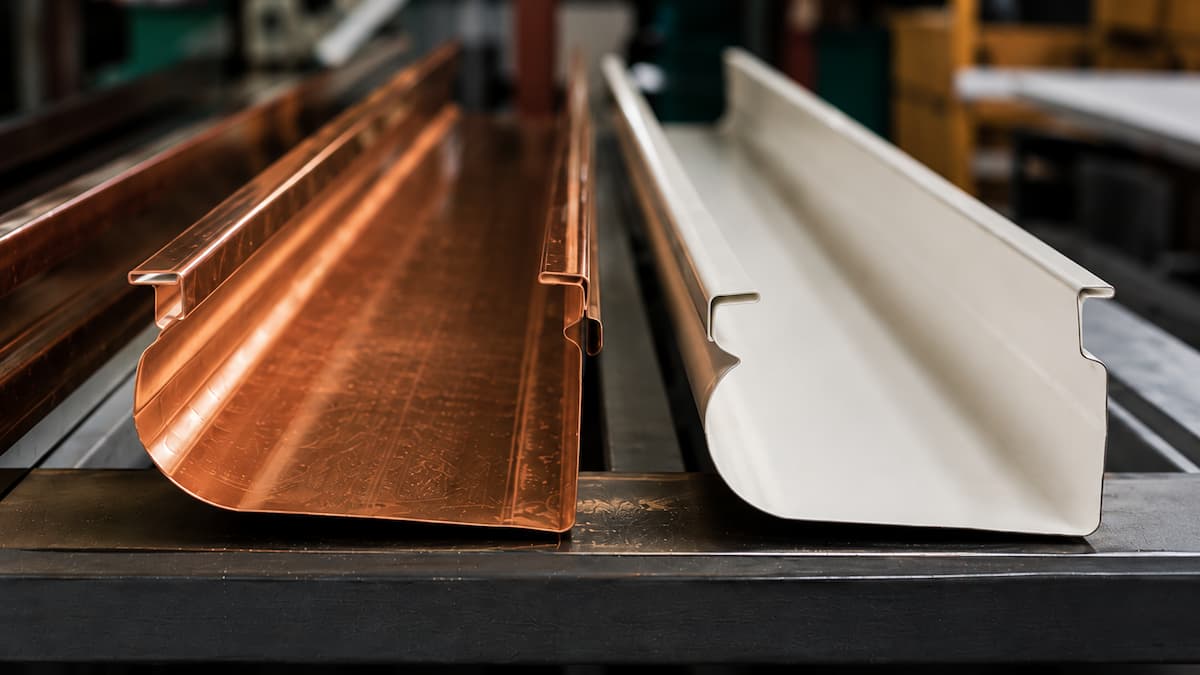
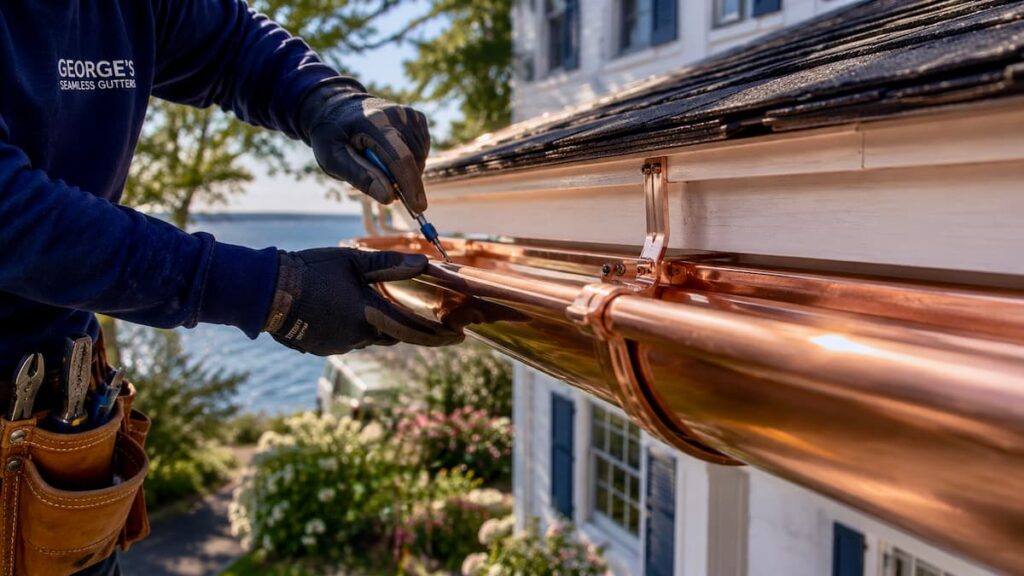
For homeowners weighing aluminum against copper specifically for a waterfront or near-coastal property, durability tends to tip the scales. Copper’s natural resistance to salt corrosion, combined with a lifespan that can stretch fifty to one hundred years, makes it a particularly strong fit for homes that face the harshest coastal conditions year after year.
“George recommends copper without hesitation for homes right on the water,” George says. “It is an investment, no question. But out here, it is the material that is genuinely built for the job.“
Assess your home's proximity to salt air and water exposure
Ask your installer about hanger spacing and fastening for high-wind areas
Confirm proper gutter pitch and sizing based on your full roof square footage
Compare copper and aluminum specifically for coastal durability
Ask about ice dam prevention as part of your gutter and roofing plan
Request a system sized for current rainfall patterns, not outdated averages
Get an in-person assessment rather than relying on a generic estimate
Why Choose George’s Seamless Gutters?
Living on the Connecticut shoreline means your home works a little harder every year. George and the team are glad to make sure your gutter system is working just as hard as it did before.
Call or text George’s Seamless Gutters at 888-321-0735, or request a free quote.